Respiratory Health Screening: How AI Technology Helps You Understand Your Lungs...
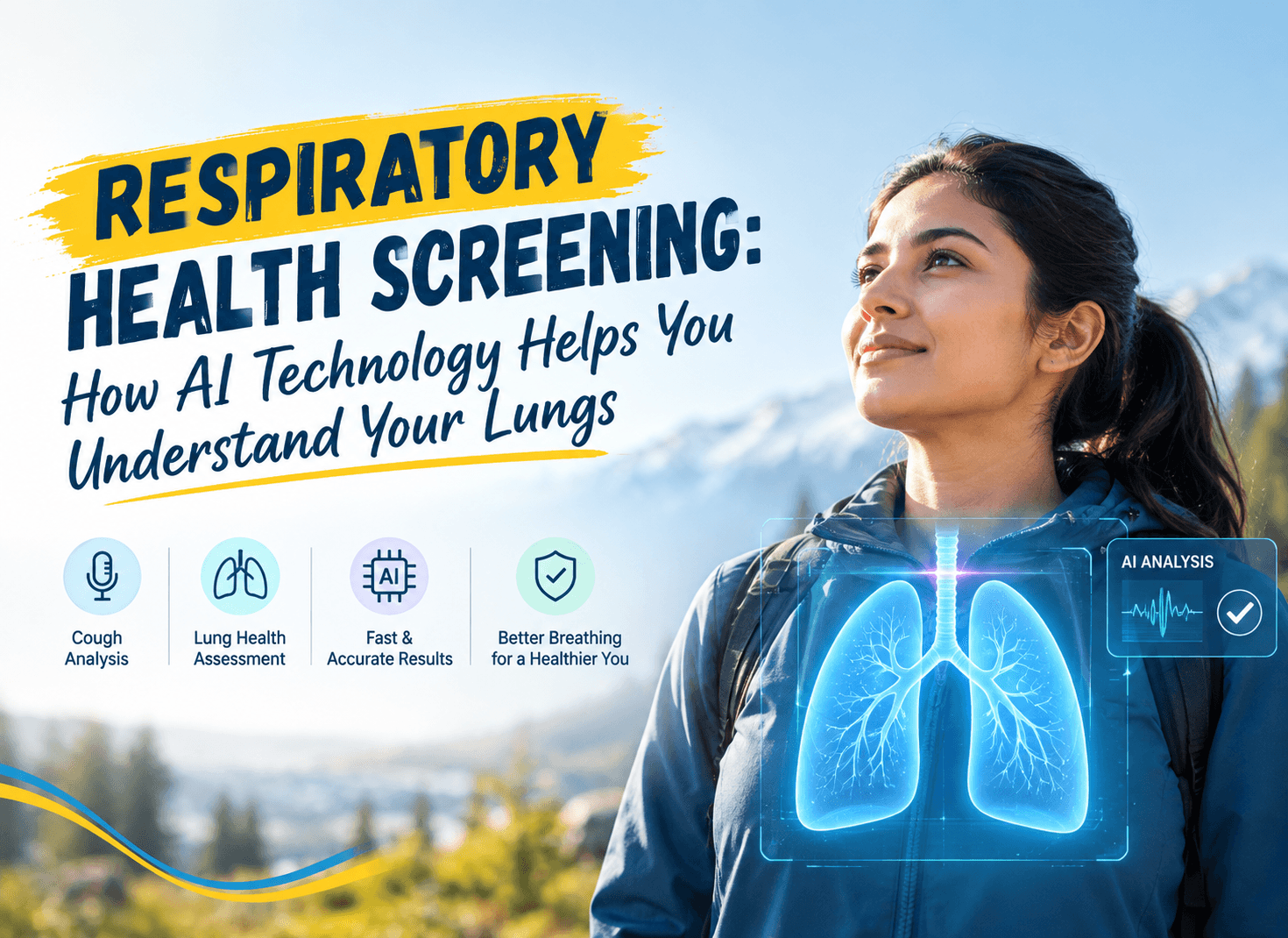
Most of us don't think about breathing until something feels off. A cough that lingers a little too long. A tight feeling in the chest after climbing the stairs. A strange whistle when you exhale. It's usually these small, easy-to-ignore moments that make us stop and wonder: is something actually going on with my lungs, or am I overthinking it?
That question is exactly why respiratory health screening exists — and it's exactly why we built Know Your Lung Health (Kylunghealth). Breathing is something your body does around 20,000 times a day without you ever consciously deciding to do it. It's automatic, invisible, and easy to take for granted — until it isn't. In this post, we're going to walk through what respiratory health screening actually means, how your lungs and airways work together, and how AI technology is starting to change the way people check in on their own respiratory health.
Why Understanding Your Lungs Organ System Matters
Your lungs aren't just two spongy sacs sitting in your chest. They're part of a much bigger, coordinated network often referred to as the lungs organ system — a network that includes your airways, blood vessels, muscles, and even your brainstem, which controls the rhythm of your breathing without you ever having to think about it.
Here's the basic flow: air enters through your nose or mouth, travels down your throat, passes through your windpipe (trachea), and splits into two main airways called bronchi — one leading to each lung. From there, those airways branch again and again into smaller and smaller tubes, eventually ending in tiny air sacs called alveoli, where oxygen actually gets exchanged with your blood.
When every part of this system is working well, you don't notice it at all. But when something changes — inflammation, narrowing, fluid buildup, infection — your lung organ system starts sending out signals. Sometimes that signal is a cough. Sometimes it's a wheeze . Sometimes it's just a vague sense that breathing takes a bit more effort than it used to. Recognizing these signals early is really the whole point of respiratory health screening .
What Your Respiratory Sounds Are Actually Telling You
Doctors have relied on listening to respiratory sounds for centuries — it's literally why the stethoscope was invented. The way air moves through your airways and lungs creates distinct, recognizable sound patterns, and changes in those patterns often show up before you'd notice anything else.
A few examples of respiratory sounds and what they can indicate:
- Wheezing — a whistling sound, usually heard when breathing out, that suggests narrowed airways (common in asthma, allergic reactions, or respiratory infections)
- Crackles — a popping or crackling sound, often linked to fluid or inflammation in the smaller airways and air sacs (common in pneumonia or certain chronic conditions)
- Stridor — a harsher, higher-pitched sound usually coming from the upper airway, which can indicate an obstruction closer to the throat
- A muffled or diminished breath sound — which can suggest reduced airflow in a specific area of the lung
Even a cough itself carries useful acoustic information. A dry, tickly cough sounds noticeably different from a wet, productive one — and both sound different again from a cough associated with airway narrowing. This is actually the foundation of how modern respiratory sound analysis works: your cough isn't just a symptom, it's data.
Respiratory System Breathing: What "Normal" Actually Looks Like
It's worth taking a moment to talk about what healthy respiratory system breathing actually looks like, because most people have never been taught this — we just assume our breathing is "normal" until it clearly isn't.
Normal, healthy breathing tends to be:
- Quiet and effortless, without noticeable wheezing, crackling, or straining
- Around 12–20 breaths per minute at rest for adults
- Smooth and even, without long pauses or sudden gasping
- Comfortable during light activity, without unusual breathlessness
When respiratory system breathing shifts away from this baseline — becoming faster, shallower, noisier, or more effortful — it's usually your body's way of compensating for something. That "something" could be as minor as temporary congestion from a cold, or as significant as an underlying condition that's been developing quietly for a while.
The tricky part is that these changes often happen gradually. You don't wake up one day dramatically short of breath — you slowly adjust to taking the stairs a little slower, or you stop noticing that your breathing sounds a bit different than it used to. This gradual adaptation is exactly why regular respiratory health screening matters, even when you don't feel like anything is seriously wrong.
Why Traditional Respiratory Screening Has Limits
For most of medical history, checking in on your lungs organ system meant going to a doctor, sitting through a physical exam, and having someone listen to your chest with a stethoscope. That approach absolutely works — but it also has real limitations.
For one, it only captures a single moment in time. Your respiratory sounds during a five-minute office visit might be completely different from how they sound during a flare-up at 2 a.m., or after a long day of exposure to allergens or pollution. Second, access matters — not everyone can easily get to a doctor's appointment every time they notice something feels off with their breathing. And third, subtle changes in respiratory sounds can be genuinely hard to catch without consistent tracking over time, even for experienced clinicians.
This is exactly the gap that AI-powered tools like Kylunghealth are designed to help close — not by replacing clinical care, but by making the earlier, more frequent parts of respiratory health screening more accessible.
How AI Technology Is Changing Respiratory Health Screening
This is where things get genuinely exciting. Artificial intelligence has become remarkably good at recognizing patterns in sound — the same underlying technology used in voice assistants and speech recognition can be applied to analyzing respiratory sounds like coughing.
Here's a simplified version of how it works: when you record a cough sample, an AI model analyzes dozens of acoustic characteristics — things like pitch, duration, intensity, and specific frequency patterns — that aren't always obvious to the human ear, especially without years of clinical training. The AI compares these patterns against what it has learned from analyzing large numbers of respiratory sound samples, and generates an accessible respiratory risk overview based on what it detects.
This doesn't replace the value of a doctor listening to your chest in person — clinical evaluation still matters, especially for confirming any actual diagnosis. But it does add something new: the ability to check in on your respiratory system breathing patterns anytime, from anywhere, without needing an appointment. For a lot of people, that accessibility alone changes the equation — instead of waiting weeks to 'see if it gets better', you can get a helpful, judgment-free starting point in minutes.
Introducing Know Your Lung Health (Kylunghealth)
This is exactly the problem we set out to solve at Know Your Lung Health (Kylunghealth). We believe that understanding your own respiratory health shouldn't require specialized equipment, a hospital visit, or years of medical training — it should be something anyone can start doing from their phone, in a couple of minutes.
Kylunghealth's AI cough analysis tool lets you record a short sample of your cough and receive an easy-to-understand respiratory risk overview, built on the same core idea doctors have used for generations: that the sounds coming from your airway respiratory system carry real, meaningful information. We've simply made that information more accessible, more consistent, and available whenever you need it — not just during a scheduled appointment.
We want to be clear about something important: Kylunghealth is a screening support tool, not a diagnostic device. It's designed to help you get a clearer initial picture of your respiratory health and decide whether it's worth following up with a healthcare provider — not to replace the expertise of an actual clinician. Think of it as an accessible first step, not a final answer.
Why Regular Respiratory Health Screening Matters
You don't need to wait until you're seriously struggling to breathe before paying attention to your respiratory health. In fact, the earlier subtle changes are caught — a slightly different cough, a new whistle in your breathing, breathlessness that crept in gradually — the more manageable most respiratory issues tend to be.
Regular screening, even informal self-checks using tools like Kylunghealth, can help you:
- Notice changes in your cough or breathing patterns before they become significant
- Build a personal baseline, so you know what "normal" actually sounds and feels like for you
- Decide more confidently when it's time to see a doctor, instead of guessing
- Stay more engaged with your own respiratory health over time, rather than only thinking about it when something feels wrong
Your lungs organ system works incredibly hard, every second of every day, without asking for much attention. Giving it a few minutes of yours every so often is a small habit that can make a real difference.
Getting Started With Kylunghealth
If you've been noticing changes in your breathing, a cough that won't quite go away, or you're simply curious about establishing a baseline for your own respiratory health, Kylunghealth makes it easy to get started. No appointment, no waiting room — just a quick, guided cough recording and an accessible overview of what our AI detects.
Understanding your respiratory system breathing patterns shouldn't feel complicated or out of reach. With the right tools, it can be as simple as checking in with yourself for a couple of minutes, whenever you feel like something's worth a closer look.
Ready to check in on your lung health? Start your free assessment with Kylunghealth today, and take the first step toward genuinely understanding your respiratory health.
Final Thought
Your respiratory system works constantly in the background, and most of the time, that's exactly how it should be — quiet, effortless, and unnoticed. But when your breathing changes, when new respiratory sounds show up, or when a cough sticks around longer than it should, those are signals worth paying attention to rather than dismissing.
Respiratory health screening doesn't need to be complicated or reserved only for moments of obvious concern. With accessible tools like Kylunghealth, checking in on your lungs organ system and airway respiratory system can become a simple, regular habit — one that helps you catch changes early and approach your respiratory health with more confidence, rather than uncertainty.
Next step
Ready to capture a cough sample?
Start a free Kylunghealth assessment and generate a clinician-ready respiratory risk snapshot in minutes.
Screening support only — not a medical diagnosis.
FAQ
Frequently asked questions
Respiratory health screening is the process of checking how well your lungs organ system and airway respiratory system are functioning, usually by evaluating symptoms, breathing patterns, and respiratory sounds like coughing, wheezing, or crackling. It can range from a formal clinical exam to a simple, at-home check using tools like Kylunghealth's AI cough analysis.