
AI-Powered Cough Analysis: A New Era in Respiratory Health Awareness
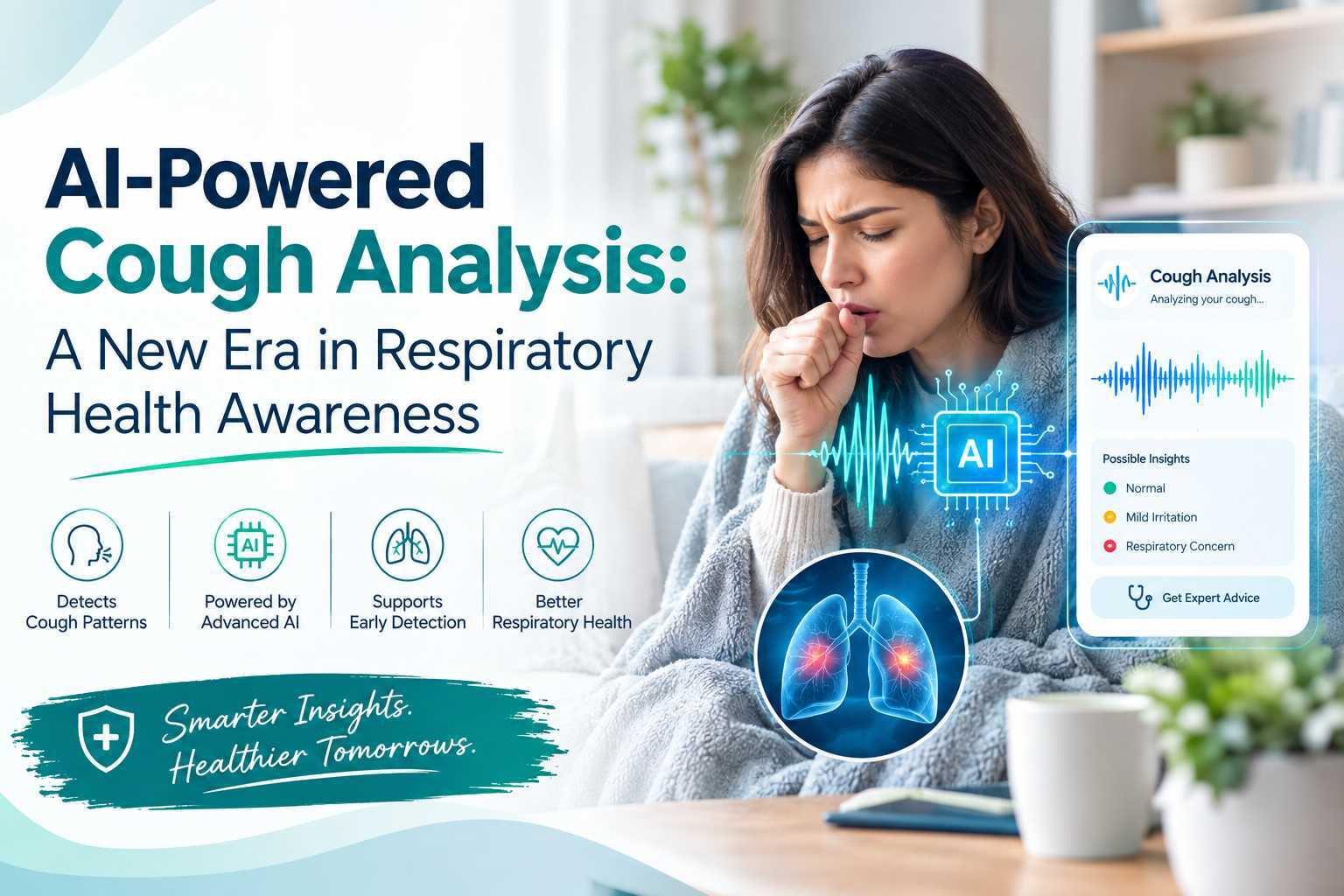
Think about the last time you coughed without really thinking about it. Maybe it was a quick tickle in your throat, or maybe it turned into a fit that lasted a full minute. Either way, you probably didn't stop to consider that your cough — that automatic, almost thoughtless reflex — actually contains a surprising amount of information about what's happening inside your body.
For most of medical history, decoding that information required a trained clinician, a stethoscope, and an in-person visit. Today, that's starting to change. AI cough analysis is emerging as one of the more practical, accessible applications of artificial intelligence in healthcare, and it's quietly reshaping how everyday people think about respiratory health awareness. Let's talk about how it works, why it matters, and where it fits into the bigger picture of understanding your lungs.
The Cough: An Overlooked Diagnostic Signal
A cough is technically a reflex — a rapid, forceful expulsion of air designed to clear irritants, mucus, or foreign particles from your respiratory system. It's controlled by receptors lining your throat, airways, and even parts of your stomach, all feeding signals back to a "cough center" in your brainstem.
What makes a cough so interesting from a diagnostic standpoint is that it's not a single, uniform sound. A cough caused by a dry, irritated throat sounds meaningfully different from one caused by mucus buildup in the lower airways. A cough tied to airway narrowing, like in asthma, can carry subtle acoustic qualities that differ from an infection-driven cough. For centuries, physicians have relied on carefully listening to these differences as part of physical examination — it's part of why the stethoscope, invented in 1816, remains one of the most iconic tools in medicine (source: Science Museum, London).
The challenge has always been consistency. Human hearing, however well-trained, is subjective and limited by the conditions of a single appointment. This is exactly the gap that AI cough analysis is starting to fill.
How AI Cough Analysis Actually Works
At its core, AI cough analysis applies the same category of technology used in speech recognition and voice assistants — pattern recognition in audio — to the specific sound signature of a human cough. Here's a simplified breakdown of the process:
- Recording — a short audio sample of your cough is captured, typically through a smartphone microphone
- Feature extraction — the AI analyzes dozens of acoustic characteristics, including frequency, pitch, duration, intensity, and specific spectral patterns that aren't easily distinguishable by ear
- Pattern comparison — these features are compared against patterns the model has learned from analyzing large volumes of respiratory sound data
- Risk overview generation — the system produces an accessible summary highlighting patterns that may be worth paying attention to
This entire process typically takes just a few seconds to a couple of minutes, compared to scheduling and attending an in-person appointment. It doesn't replace clinical judgment, but it does add a layer of consistency and accessibility that simply didn't exist before.
Why Respiratory Sounds Matter So Much
To understand why AI cough analysis is such a meaningful development, it helps to step back and appreciate just how much information respiratory sounds carry in general. Clinicians have long relied on distinguishing between different respiratory sounds — wheezing, crackles, stridor, and variations in cough character — as one of the fastest, most non-invasive ways to assess what's happening inside the lungs organ system.
According to the National Heart, Lung, and Blood Institute, your lungs and airways form a highly coordinated system responsible for the constant exchange of oxygen and carbon dioxide that keeps every cell in your body functioning. When something disrupts that system — inflammation, infection, narrowing, fluid buildup — the resulting changes in respiratory sounds are often one of the earliest external signs available, well before someone might notice significant breathlessness or other symptoms.
This is part of why AI-based respiratory sound analysis has drawn so much interest in recent years across the digital health space — it's targeting one of the richest, most accessible sources of early respiratory information available: the sounds your body is already making.
Suggested Blog: Respiratory Health Screening: How AI Technology Helps You Understand Your Lungs
Respiratory System Breathing: The Bigger Picture Behind Your Cough
A cough doesn't happen in isolation — it's one output of your broader respiratory system breathing process. Understanding this bigger picture helps explain why a seemingly simple cough can point to so many different underlying causes.
Normal respiratory system breathing involves a coordinated sequence: your diaphragm contracts, your chest cavity expands, air is pulled through your airway into your lungs, and oxygen is exchanged for carbon dioxide at the cellular level before the whole process reverses on the exhale. This happens roughly 12 to 20 times per minute in a resting adult, entirely without conscious effort.
When something disrupts any part of this sequence — whether it's inflammation in the smaller airways, fluid in the alveoli, or irritation higher up in the throat — your body often responds with a cough as a corrective or protective mechanism. This is why a comprehensive AI cough analysis approach doesn't just look at the cough sound in isolation, but considers it as a signal generated by the broader respiratory system breathing process as a whole.
From Reactive to Proactive: A Shift in Respiratory Health Awareness
For a long time, respiratory health has been largely reactive — people typically sought care only once symptoms became disruptive enough to justify an appointment. AI cough analysis is part of a broader shift toward more proactive respiratory health awareness, where people can check in on subtle changes before they escalate.
This shift mirrors what's already happened in other areas of personal health tracking. Wearable devices made it normal to casually check your heart rate or sleep quality without a doctor's visit. AI cough analysis is extending that same logic to respiratory health — giving people an accessible way to notice when something about their breathing or cough has changed, without needing to justify booking an appointment for "just a cough."
This doesn't mean skipping medical care when it's genuinely needed — it means catching potential concerns earlier, and approaching necessary medical visits with more information already in hand.
Real-World Use Cases for AI Cough Analysis
AI cough analysis has practical applications across several everyday situations:
- Tracking a lingering cough — if you've had a cough for more than a couple of weeks and aren't sure whether it's worth seeing a doctor, an AI-generated respiratory risk overview can help inform that decision
- Monitoring chronic conditions — people managing asthma or other ongoing respiratory issues can use periodic recordings to notice patterns or flare-ups over time
- Post-illness recovery tracking — after a respiratory infection, tracking whether your cough is improving or persisting can help identify whether recovery is on track
- General health curiosity — some people simply want a better baseline understanding of their own respiratory system breathing patterns, even without an active concern
Introducing Know Your Lung Health (Kylunghealth)
This is precisely the space Know Your Lung Health — Kylunghealth — was built to serve. We designed our AI cough analysis tool around a simple belief: understanding your own respiratory health shouldn't require specialized equipment or a scheduled appointment. It should be something anyone can access from their phone, whenever they need it.
Using Kylunghealth is straightforward. You record a short cough sample directly through our platform, and our AI analyzes the acoustic patterns to generate an accessible respiratory risk overview — the kind of insight that used to require an in-person clinical exam to even begin exploring. If you're curious about the mechanics behind how this fits into broader respiratory health screening, our Respiratory Health Screening page walks through the full picture, and our How It Works page breaks down the process step by step.
We want to be transparent about what this technology is and isn't. Kylunghealth's AI cough analysis is a screening support tool — not a diagnostic device. It's designed to help you build awareness and make more informed decisions about when to seek professional care, not to replace the judgment of a qualified healthcare provider. For persistent, worsening, or concerning symptoms, an in-person evaluation remains essential.
The Limitations Worth Understanding
No responsible discussion of AI cough analysis would be complete without acknowledging its current limitations. This technology is still developing, and there are important boundaries to keep in mind:
- AI cough analysis identifies patterns and risk indicators — it does not provide a medical diagnosis
- Environmental factors like background noise or recording quality can affect the accuracy of any audio-based analysis
- Some respiratory conditions require additional diagnostic tools — like imaging, lung function tests, or bloodwork — that go beyond what sound analysis alone can capture
- The technology continues to improve as more data becomes available, meaning today's tools represent an early but promising stage of this field
Being upfront about these limitations isn't a weakness — it's what makes a tool genuinely trustworthy and safe to use as part of a broader respiratory health routine.
Where This Technology Is Headed
AI-driven respiratory health tools are still in a relatively early chapter, but the trajectory is clear: sound-based analysis of coughs and other respiratory sounds is becoming more sophisticated, more accessible, and more integrated into how people think about their everyday health. What once required a stethoscope and a scheduled appointment is gradually becoming something people can check on their own terms, using the device already in their pocket.
This growing interest in lung health tracking isn't happening in isolation. Chronic respiratory conditions like asthma and COPD affect hundreds of millions of people worldwide, and early awareness continues to be one of the most effective ways to manage long-term respiratory outcomes (source: World Health Organization). As more people search for practical ways to monitor a persistent cough, shortness of breath, or general lung health at home, AI cough analysis is positioned to become a genuinely useful entry point — not a replacement for care, but a bridge that helps people decide when that care is actually needed.
At Know Your Lung Health, we believe this shift matters. Respiratory health shouldn't be something people only think about during a crisis — it should be something people can casually check in on, the same way they might check their step count or sleep tracking. Your lungs, an organ system, work constantly, coordinating every breath you take, and giving them a little more attention doesn't have to be complicated. If you'd like to dig deeper into specific respiratory symptoms, our Articles page covers topics ranging from dry cough versus wet cough to understanding wheezing and other respiratory sounds in more detail.
If you've been curious about your respiratory health, or you've noticed a cough that's ilupsxlop longer than expected, there's no need to wait for it to become disruptive before taking a closer look.
Curious what your cough might be telling you? Try Kylunghealth's free AI cough analysis and take the first step toward better respiratory health awareness.
Next step
Ready to capture a cough sample?
Start a free Kylunghealth assessment and generate a clinician-ready respiratory risk snapshot in minutes.

Screening support only — not a medical diagnosis.
FAQ
Frequently asked questions
AI cough analysis is a technology that uses artificial intelligence to analyze the sound characteristics of a recorded cough — such as pitch, duration, and frequency patterns — to generate insights about respiratory health. It's used as a screening support tool rather than a diagnostic one.