
The Science Behind AI Cough Analysis, Explained Simply
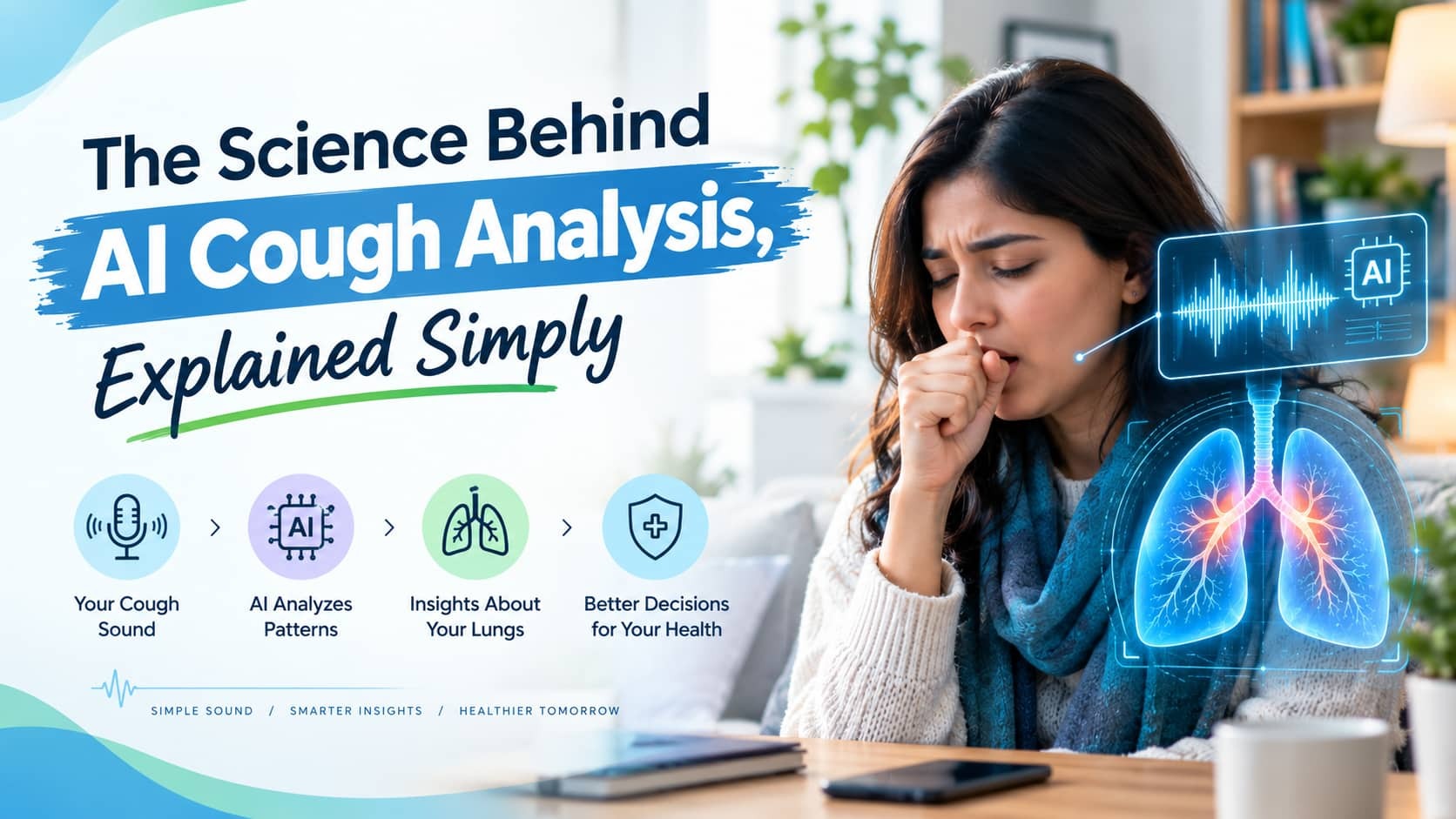
If someone told you that a smartphone could listen to your cough and give you insight into your respiratory health, you'd probably have questions. Is that actually possible? Isn't a cough just... a cough? It turns out there's real, growing science behind this idea, and it's a lot less like science fiction and a lot more like something doctors have quietly known for decades — sound carries information, and your cough is no exception.
At Know Your Lung Health (Kylunghealth), this is the exact question we get asked most often: how does AI cough analysis actually work? So let's break it down in plain language, without the jargon, and walk through the science that makes this technology possible.
Cough Isn't Just Noise — It's Data
For most of us, a cough is just an annoying interruption. But to a trained clinician, a cough carries a surprising amount of information — its pitch, sharpness, wetness, and rhythm all hint at what's happening inside your airways. This isn't a new idea. Doctors have relied on listening to respiratory sounds since the invention of the stethoscope, using subtle acoustic cues to tell a dry, irritated cough apart from a wet, infection-driven one.
What's changed recently is our ability to measure these acoustic cues with much greater precision than the human ear alone can manage. Researchers reviewing decades of cough-sound literature have described cough sound as a promising, accessible, non-invasive disease biomarker, particularly as machine learning capabilities and smartphone recording technology have advanced. In other words: your cough was always giving off signals — we just didn't have a scalable way to interpret them consistently until now.
Why Human Ears Aren't Always Reliable
Here's something that might surprise you: even experienced healthcare professionals aren't especially accurate at diagnosing a condition just by listening to a cough. In one clinical study, healthcare professionals listened to a series of recorded coughs and tried to identify features like the presence of mucus, wheeze, and the underlying diagnosis. They correctly identified whether mucus was present roughly 76% of the time, but correctly identified wheeze only about 39% of the time. When it came to identifying the actual clinical diagnosis from the cough sound alone, accuracy dropped to roughly a third of cases.
This isn't a criticism of clinicians — it's actually the whole point. The human ear is good at picking up general qualities of respiratory sounds, but it struggles with the fine-grained, consistent measurement needed to reliably connect a specific sound pattern to a specific condition. That's precisely the kind of task computers are well-suited for.
How AI Cough Analysis Actually Works
So how does a piece of software go from "here's an audio file of a cough" to "here's a respiratory risk overview"? It comes down to a few key steps.
1. Capturing the sound: When you record a cough sample, what's really being captured is a detailed sound wave — every subtle vibration, frequency, and change in intensity over the (very short) duration of the cough itself.
2. Extracting acoustic features: This is where the real science lives. AI cough analysis tools break that sound wave down into dozens or even hundreds of measurable characteristics — things like frequency distribution, energy patterns, and spectral shape. Researchers studying cough acoustics have specifically looked at features like the relative power across different frequency bands and have found that specific frequency bands tend to correlate with different respiratory conditions after analyzing large cough sample datasets. Other studies have used similar frequency-based approaches, along with features like peak energy, to explore differences between coughs linked to asthma, COPD, and other conditions.
3. Pattern recognition through machine learning: Once these acoustic features are extracted, machine learning models are trained to recognize patterns within them — essentially learning what combinations of features tend to show up together. This is the same fundamental approach that powers technologies like voice assistants and speech recognition, just applied to a different kind of sound.
4. Generating an accessible output: Finally, all of that technical analysis gets translated into something genuinely useful for you — an easy-to-understand respiratory risk overview, rather than a wall of raw acoustic data no one outside a research lab could interpret.
Respiratory Sounds Are More Than Just Coughing
While a cough is the most obvious respiratory sound most people notice, it's really just one piece of a much bigger picture. Your overall respiratory sounds — the noise your breathing makes as air moves through your lungs — include wheezing (a whistling sound from narrowed airways) and crackles (a popping sound associated with fluid or inflammation in smaller airways).
Understanding cough in this broader context matters because it rarely occurs in isolation. A cough tied to asthma often behaves differently — in terms of triggers, timing, and even acoustic quality — than a cough tied to a common cold or to something like bronchitis. This is part of why researchers have specifically studied how cough acoustics differ across conditions like pneumonia and asthma, not just whether a cough is generically "present."
What Makes Respiratory System Breathing Change the Sound of a Cough
It helps to understand a bit about why your respiratory system's breathing changes the way a cough actually sounds. When your airways are healthy and clear, a cough tends to be sharper, shorter, and more explosive — a quick burst of air forcefully expelled. When there's inflammation, narrowing, or mucus involved, that airflow gets disrupted in specific, measurable ways: the cough might sound more prolonged, wetter, or have a different pitch pattern entirely.
This is why acoustic cough analysis isn't just measuring "loudness" or "how bad" a cough sounds to a casual listener — it's measuring structural changes in how air is actually moving through your airway respiratory system, which is exactly the kind of information a computer model can pick up more reliably and consistently than a human ear working from memory and general impression alone.
Real Research Behind This Technology
This isn't a fringe idea — acoustic cough analysis has been an active area of academic and clinical research for years, including large-scale studies during the COVID-19 pandemic, when researchers urgently needed accessible, non-invasive screening tools. Multiple published studies have explored using cough sound datasets, sometimes involving well over a thousand participants, to identify frequency-based patterns associated with specific respiratory conditions. If you want to dig into the technical side yourself, a helpful starting point is this survey of cough sound bioacoustics research, which reviews how this field has evolved over the past decade.
It's worth being honest about where the science currently stands: acoustic cough analysis is a genuinely promising and rapidly developing field, but it's not yet a substitute for full clinical diagnosis. Most published research describes this technology as a screening support tool — something that can flag patterns worth paying attention to, rather than something that replaces a doctor's evaluation, physical exam, or diagnostic testing.
How Kylunghealth Applies This Technology
At Know Your Lung Health, our AI cough analysis tool is built on these same core scientific principles. When you record a cough sample through Kylunghealth, our AI analyzes the acoustic characteristics of that recording — patterns in frequency, duration, and sound quality — and generates a clear, accessible respiratory risk overview based on what it detects.
We built Kylunghealth because we believe this kind of insight shouldn't be locked away in research papers and academic institutions. It should be something anyone can access from their own phone, in just a couple of minutes, without needing to book an appointment or wait for symptoms to become obvious enough to justify a doctor's visit.
To be fully transparent: Kylunghealth's AI cough analysis is a screening support tool, not a diagnostic device. It doesn't replace clinical evaluation, and it isn't intended to independently diagnose specific conditions. What it does offer is a fast, judgment-free way to check in on your respiratory health and decide whether it's worth following up with a healthcare provider — informed by the same underlying science that's been building in research labs for years. You can learn more about how the full process works on our How It Works page, or explore our broader approach to respiratory health screening.
Why This Matters for Everyday People
You don't need to understand spectral analysis or machine learning models to benefit from this technology — that's really the point. The complexity happens behind the scenes, so what you experience is simple: record a cough, get an accessible overview, and decide your next step with a bit more clarity than you had before.
This matters most for the situations that fall into that frustrating gray area — a cough that's lingered a little too long, or breathing that feels slightly different than usual, but not dramatically enough to feel like an emergency. These are exactly the moments when people tend to put off seeing a doctor, simply because they're not sure if it's "worth it" yet. Having an accessible tool that adds a little clarity to that decision, grounded in real acoustic science, can make a meaningful difference in when people actually seek care.
The Bottom Line
AI cough analysis isn't magic — it's applied acoustic science, built on decades of research showing that respiratory sounds carry real, measurable information about what's happening in your airways and lungs. Machine learning simply allows us to analyze that information with a level of consistency and precision the human ear alone can't match.
At Kylunghealth, we've taken this research and turned it into something practical: an accessible tool that helps you understand your own respiratory system's breathing patterns, right from your phone. It's not a replacement for your doctor — but it might just be the nudge you need to take a cough that's been bothering you a little more seriously.
Curious what your own cough sounds like to an AI? Try Kylunghealth's free assessment and see your respiratory risk overview in minutes.
Where This Technology Is Headed
Acoustic analysis of respiratory sounds is still a young field compared to more established diagnostic tools, but the trajectory is clear: as datasets grow larger and machine learning models become more refined, the accuracy and reliability of AI cough analysis will continue to improve. Researchers are already exploring how these techniques might help monitor chronic conditions like asthma and COPD over time, not just flag a single moment of concern.
For now, tools like Kylunghealth represent an early, practical application of this research — bringing genuinely useful, science-backed screening support out of academic papers and into something anyone can use from their own phone. As the underlying science matures, we expect these tools to become an increasingly normal part of how people check in on their respiratory health, alongside — not instead of — regular medical care.
Next step
Ready to capture a cough sample?
Start a free Kylunghealth assessment and generate a clinician-ready respiratory risk snapshot in minutes.

FAQ
Frequently asked questions
Accuracy varies depending on the specific model, dataset, and condition being studied, and this remains an active area of academic research. Published studies have shown that acoustic features extracted from cough sounds can meaningfully correlate with certain respiratory conditions, but AI cough analysis is currently best understood as a screening support tool rather than a definitive diagnostic method.