Common Respiratory System Problems and Their Early Warning Signs
By Dhanesh Suryawanshi · Chief Executive Officer, Know Your Health
You climb the same flight of stairs you've climbed for years, and today you need to stop halfway to catch your breath. Or maybe it's a cough that started after a cold and never quite went away. You tell yourself it's nothing: stress, age, a busy month.
Sometimes it is nothing. But sometimes it's one of the earliest signs of respiratory system problems, and catching those signs early can change the whole story. Many lung conditions develop slowly and quietly. By the time the symptoms are impossible to ignore, the lungs may already be struggling.
In this guide, we'll walk through the most common respiratory problems, the early warning signs that go with each one, and when it's time to talk to a doctor. We'll keep the language simple and the advice practical. At Know Your Lung Health (Kylunghealth), we believe that understanding your body is the first step to protecting your respiratory health.
This article is for education only and isn't a diagnosis. If you're struggling to breathe, call emergency services right away.
Why Respiratory Health Deserves Your Attention
Your respiratory system includes your nose, throat, windpipe, bronchial tubes and lungs. Together they bring oxygen into your body and carry carbon dioxide out, around 20,000 times a day without you ever thinking about it.
Because breathing feels automatic, we tend to notice lung problems late. Many conditions also share the same symptoms, such as cough, wheezing and shortness of breath, which makes them easy to mistake for a cold, allergies or simply being out of shape.
That's why knowing the pattern matters. A symptom that is new, persistent or getting worse is your cue to pay attention.
7 Common Respiratory System Problems and Their Early Warning Signs
1. Asthma
Asthma is a long-term condition in which the airways become inflamed and narrow, making it harder for air to move in and out. The World Health Organization describes asthma as a chronic lung disease affecting people of all ages, and notes that it is often under-diagnosed and under-treated.
Early warning signs of asthma:
- Wheezing, especially a whistling sound when breathing out
- A cough that's worse at night or early in the morning
- Chest tightness
- Shortness of breath during exercise or around triggers like dust, pollen, smoke or cold air
- Symptoms that come and go
Why it's often missed: Many people, especially adults, assume they just have a "lingering cough" or poor fitness. If your symptoms follow a pattern, such as always flaring at night or after exercise, mention it to your doctor.
2. Chronic Obstructive Pulmonary Disease (COPD)
COPD is a group of lung conditions, including chronic bronchitis and emphysema, that make it increasingly hard to breathe. The World Health Organization highlights COPD as a major cause of long-term lung illness worldwide. Smoking is the leading cause, though long-term exposure to air pollution, dust and chemical fumes also plays a role.
Early warning signs of COPD:
- A chronic cough that lasts for months, sometimes called a "smoker's cough"
- Coughing up mucus on most days
- Getting breathless during everyday activities like walking or climbing stairs
- Frequent chest infections
- Wheezing or a feeling of tightness in the chest
A common mistake: Many people with early COPD adjust their lives without realizing it. They walk slower, avoid stairs and take more breaks, and they blame age. If that sounds familiar, don't wait. Early diagnosis and treatment can slow the damage.
3. Bronchitis
Bronchitis means inflammation of the bronchial tubes, the airways that carry air to your lungs. It comes in two forms. Acute bronchitis usually follows a cold or virus and clears in a few weeks. Chronic bronchitis, a form of COPD, lasts much longer and keeps coming back.
Early warning signs of bronchitis:
- A persistent cough that may bring up clear, white, yellow or green mucus
- A rattling or rumbling feeling in the chest
- Mild fever and fatigue
- A sore throat or slight breathlessness
When to worry: If a cough lasts more than three weeks, keeps returning every year, or comes with a high fever or breathlessness, see a doctor.
4. Pneumonia
Pneumonia is an infection that inflames the air sacs in one or both lungs. They can fill with fluid or pus, making it hard to take in oxygen. It can be caused by bacteria, viruses or fungi, and it can be serious, particularly for young children, older adults and people with weakened immune systems.
Early warning signs of pneumonia:
- Cough that brings up phlegm
- Fever, chills and sweating
- Shortness of breath or fast breathing
- Sharp chest pain when breathing in or coughing
- Unusual tiredness, and in older adults, sudden confusion
Don't wait it out: A "cold" that suddenly gets worse after a few days of improvement can be a sign of pneumonia. Seek medical care promptly if you notice this pattern.
5. Pulmonary Fibrosis and Interstitial Lung Disease
Pulmonary fibrosis happens when lung tissue becomes scarred and stiff, making it harder for the lungs to expand. It develops slowly, and many people don't get a diagnosis until the condition is well along.
Early warning signs:
- A dry, persistent cough that doesn't respond to usual treatments
- Shortness of breath that gradually gets worse, especially with activity
- Unusual fatigue
- Unexplained weight loss
- Widening and rounding of the fingertips, known as clubbing, in some people
Why early detection matters: Scarring can't be reversed, but treatment can slow its progress. This makes early diagnosis especially valuable.
6. Lung Cancer
Lung cancer often causes no symptoms in its earliest stages, which is exactly why paying attention to subtle changes matters. Smoking is the biggest risk factor, but people who have never smoked can develop it too.
Early warning signs to take seriously:
- A new cough that doesn't go away, or a long-term cough that changes
- Coughing up blood, even a small amount
- Chest pain that gets worse with deep breathing, coughing or laughing
- Hoarseness
- Unexplained weight loss and loss of appetite
- Repeated bouts of bronchitis or pneumonia
The takeaway: A cough that lasts more than three weeks deserves a medical evaluation, particularly if you smoke, used to smoke, or have been exposed to hazards like asbestos or heavy air pollution.
7. Sleep Apnea
Sleep apnea is a breathing problem during sleep in which the airway repeatedly narrows or closes. It's a respiratory condition people often overlook, because it happens while they're asleep.
Early warning signs:
- Loud, frequent snoring
- Gasping or choking during sleep, often noticed by a partner
- Waking with a dry mouth or morning headache
- Daytime sleepiness despite a full night in bed
- Trouble concentrating
Why it matters: Untreated sleep apnea is linked to high blood pressure and heart problems. If a partner says you stop breathing in your sleep, tell your doctor.
General Early Warning Signs of Lung Problems You Shouldn't Ignore
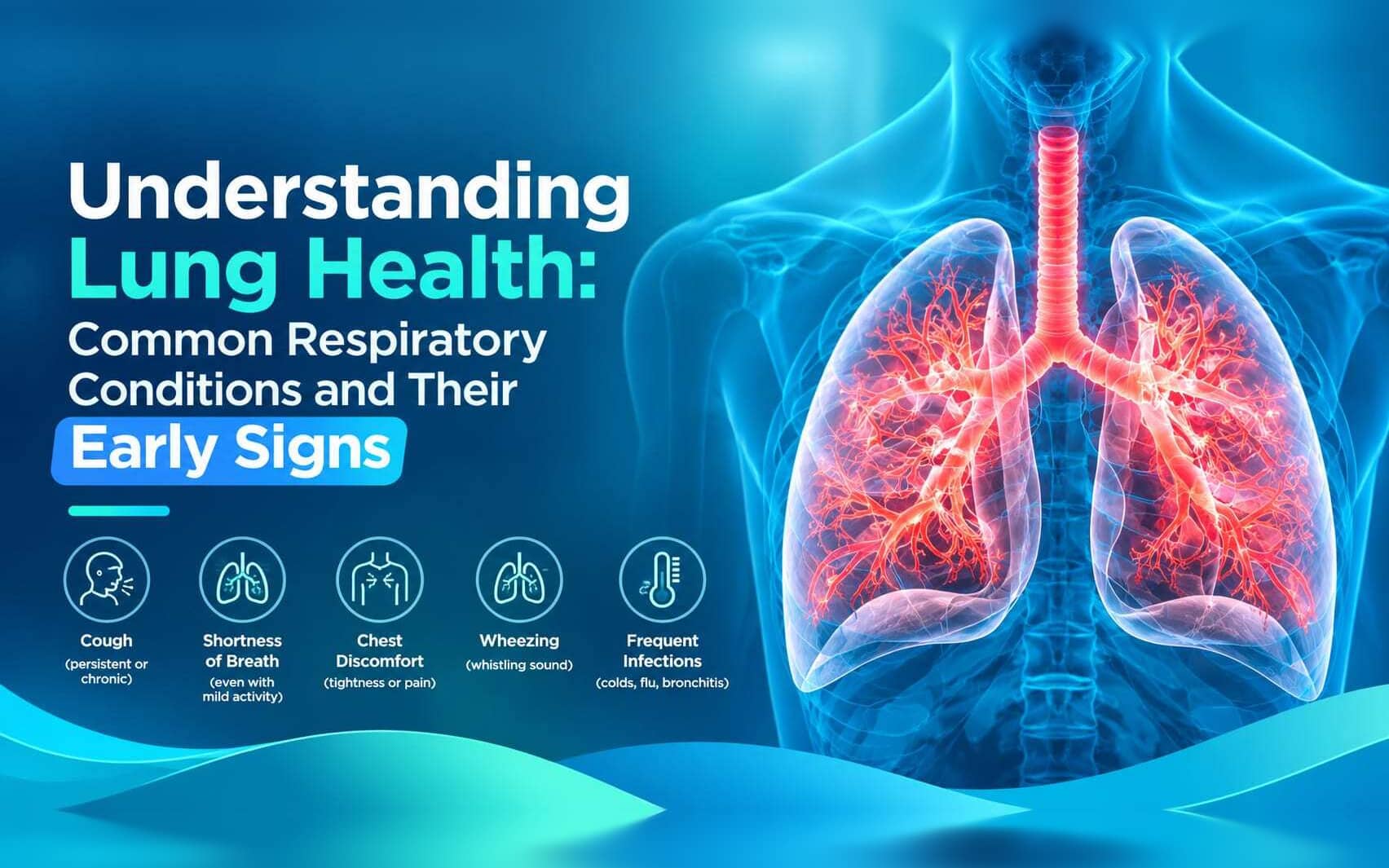
Across almost every respiratory condition, a few signals show up again and again. Watch for:
- A cough lasting longer than three weeks, or one that keeps returning
- Shortness of breath during activities that used to feel easy
- Wheezing, whistling or other unusual breathing sounds. If you've noticed these, our guide to abnormal lung sounds explains what they could mean
- Chest tightness or pain when you breathe in
- Coughing up blood or discolored mucus
- Frequent chest infections
- Unexplained fatigue or weight loss
- Swelling in your ankles or legs alongside breathlessness
As the U.S. National Library of Medicine's MedlinePlus explains, a doctor can learn a lot just by listening to the sounds of your breathing with a stethoscope, which is why persistent changes in how your chest sounds or feels are worth checking.
When to Seek Emergency Help
Some symptoms need immediate action. Call emergency services if you or someone else has:
- Severe difficulty breathing or gasping for air
- Blue or gray lips, face or fingertips
- Sudden, severe chest pain
- Coughing up a lot of blood
- Confusion, fainting or extreme drowsiness with breathing trouble
- Swelling of the face or throat after an allergic trigger
How Doctors Diagnose Respiratory Problems
If you see a healthcare provider about your symptoms, expect them to start with questions: how long it's been going on, what makes it better or worse, whether you smoke and what you do for work. Then they'll typically listen to your chest and, depending on what they find, may suggest:
- Spirometry, a breathing test that measures how well your lungs work
- Chest X-ray or CT scan
- Blood tests or a sputum sample
- Pulse oximetry to check oxygen levels
- Allergy testing or a sleep study, where relevant
Come prepared. A short list of your symptoms, when they started and any triggers you've noticed will make the appointment far more productive.
How Kylunghealth Can Help You Keep an Eye on Your Respiratory Health
One of the hardest parts of respiratory health is that symptoms come and go. By the time you're in the exam room, the cough may have settled, and describing it in words isn't easy.
That's why we created Know Your Lung Health (Kylunghealth).
Kylunghealth is a respiratory health screening platform built on a simple idea: better information leads to better conversations with your doctor. Using AI cough analysis, you record 3 to 5 coughs in a quiet place on your phone or computer. The tool looks at acoustic patterns, such as whether a cough sounds dry or wet and signs of wheeze, and produces a plain-language report that you can share with a healthcare professional. You can see exactly how it works before you begin.
A few honest points:
- It's screening support, not a diagnosis. Kylunghealth doesn't replace a doctor or a stethoscope exam.
- Your privacy matters. Health data is encrypted, and the platform lists certifications including ISO/IEC 27001 and HIPAA compliance.
- It helps you notice changes over time, which is especially helpful for people with asthma, COPD or a cough that won't go away.
Want to know more about who we are? Visit our About Kylunghealth page. And if a cough or breathing change has been on your mind, you can start a free assessment in just a few minutes.
Everyday Habits That Support Lung Health
You can't prevent every respiratory problem, but small habits make a real difference:
- Don't smoke, and avoid secondhand smoke. It is the single most effective step for protecting your lungs.
- Keep vaccines up to date, such as flu and pneumonia vaccines if your doctor recommends them.
- Improve indoor air quality with good ventilation and by avoiding indoor smoke, strong fumes and mold.
- Protect yourself at work with masks or ventilation if you're exposed to dust, chemicals or fumes.
- Stay active. Regular exercise strengthens your breathing muscles and your heart.
- Wash your hands often to lower your risk of respiratory infections.
- Take prescribed medications as directed if you have asthma or COPD.
For more practical guidance, browse our lung health articles.
Final Thoughts
Respiratory problems rarely begin with a dramatic event. More often, they start with something small: a cough that lingers, a wheeze at night, stairs that suddenly feel steeper. Those small signals are your body's way of asking for attention.
The goal isn't to panic over every sniffle. It's to know your normal, notice what changes and act early when something doesn't feel right. Remember the simple rule: new, persistent or worsening symptoms deserve a conversation with a healthcare professional.
If you're curious about your own cough or breathing, take the first step with Kylunghealth. Start your free assessment today and bring clearer answers to your next doctor's visit.
For a closer look at one common warning sign, see our guide to cough and shortness of breath, and when to worry.
Next step
Ready to capture a cough sample?
Start a free Kylunghealth assessment and generate a clinician-ready respiratory risk snapshot in minutes.

FAQ
Frequently asked questions
The most common include asthma, COPD, bronchitis, pneumonia, pulmonary fibrosis, lung cancer and sleep apnea. Each has its own early warning signs, though many share symptoms like cough and shortness of breath.